Considerations in a Phenomonological Approach
My proposed research will undertake a phenomenological examination of the role perceptions of newly appointed faculty play. The study will seek to understand how university faculty think about their teaching responsibilities and how they view the effects of educational technologies and media on their instructional work.
This page is dedicated to beginning the examination of what phenomenology as a research method is about and how it might take shape in this particular research.
From our research methods notes:
|
Phenomenology
For example, we know that lots of people are carers. But what does “caring” actually mean and what is it like to be a carer? Or, what is it actually like to live with back pain? What are the effects on peoples’ lives? What problems does it cause? A phenomenological study might explore, for example, the effect that back pain has on sufferers’ relationships with other people by describing the strain it can cause in marriages or the effect on children of having a disabled parent. Foundational Question: Life-Worlds
|
Situating Research:
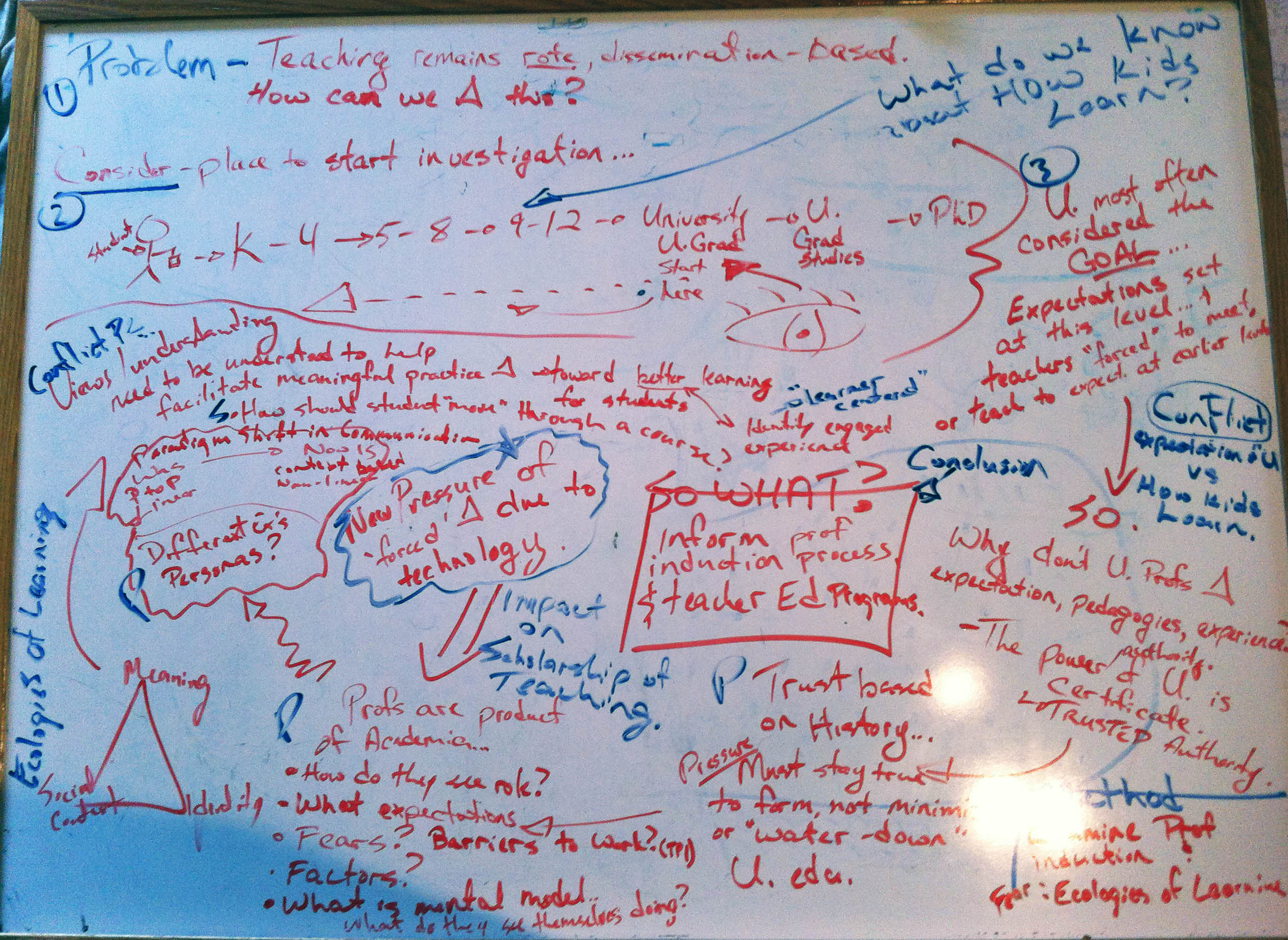
The Following image is a representation of some whiteboard thinking around the "big picture" and context of my research. Many of the noted ideas will not be covered through this research, but assists in situating the research and participants within a larger scope.
Interview Question Topic - for a loosely structured interview:
- How do faculty describe their current activities as teachers—what do they commonly do when engaged in teaching?
- What teaching strategies do they claim to use most commonly?
- What descriptions do faculty apply to their roles as teachers: lecturer, mentor, tutor, coach, facilitator, and provocateur? How do they rank the relative importance of different roles in their instructional repertoire?
- How do faculty understand the purposes of the university curriculum for which they have instructional responsibility: personal development, vocational preparation, development of the capacity for self-direction and independent learning, development of effective citizenship and social contribution?
- What are the opinions of the study participants about the roles and influences of various technologies and media in their teaching and learning?
- What are their perceptions of the arrangements made by the university to provide them with orientation, assistance, or learning opportunities in order to prepare them for teaching? If the university did offer some form of assistance or induction to teaching, what effect has it had on their instructional activities?